Liberealism: Mark Carney's New World Order
Canadian Prime Minister Mark Carney’s epochal speech at the 2026 World Economic Forum Annual Meeting in Davos has set the globe on fire. In particular, Carney’s speech was notable in that it indirectly rebuked U.S. President Donald Trump and called out “American hegemony” for hypocritically creating exemptions for itself in the “international rules-based order,” in ways that harmed allies and rivals alike. Besides, while Carney’s speech was not unprecedented in its attempt to thread the needle between liberalism and realism in international relations theory, the speech was notable in that it articulated an approach for “middle powers” to collectively defend their interests in a realist world without having to bend to the whims of the superpowers or abandon the system of “economic integration” that has given way to “great power rivalry.” Insofar as Carney blends the worldview of realism with the toolkit of liberalism to form an action plan for middle powers, the "Carney consensus" could also be understood as "liberealism," or "middle power realism." This article attempts to explore the implications of Carney's "liberealism" for Canada, the EU, and India, while proposing a "middle power alliance" of seven cross-regional nations to complement the G7, BRICS, and the G20.
The Cowichan Case: Aboriginal Title in Anglophone Countries
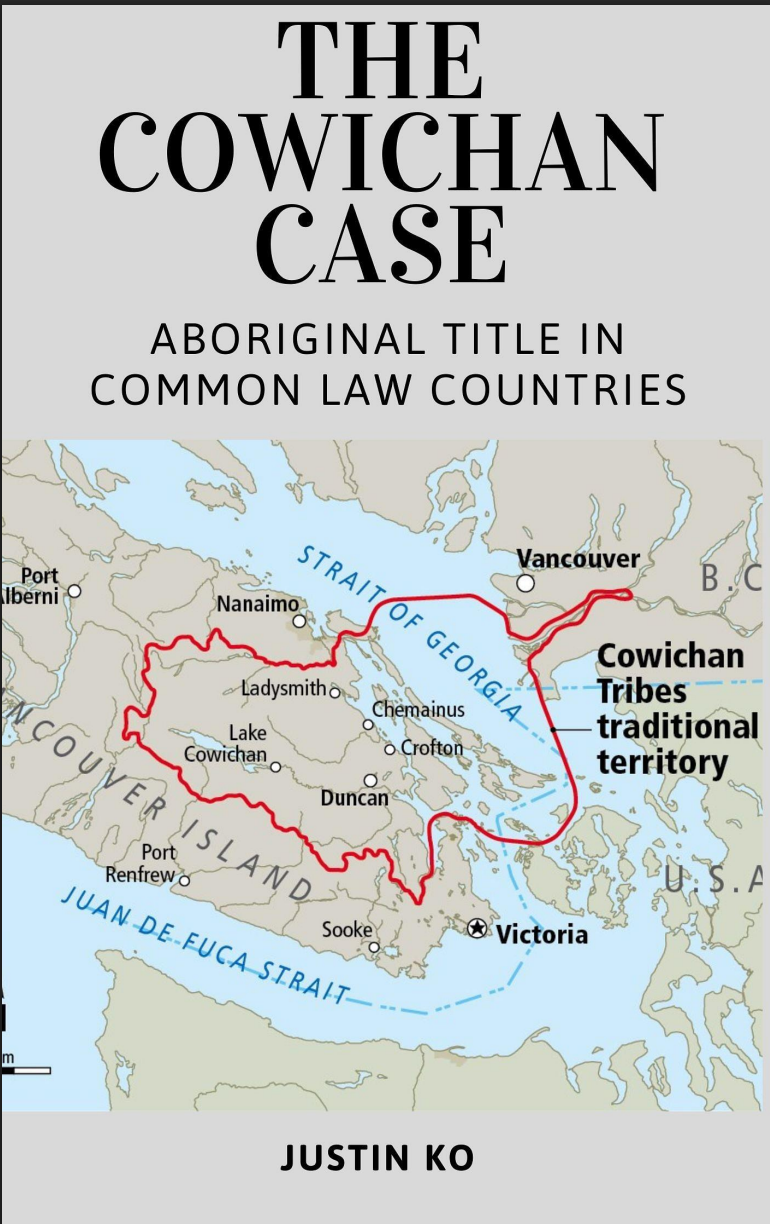
Canada is not typically known within the common law system for landmark precedents. Nonetheless, Aboriginal and indigenous law has been one area in which Canada has long had a progressive and “enlightened” reputation compared to other common law countries. Most recently, in August 2025, the British Columbia Supreme Court made a groundbreaking decision in Cowichan Tribes v Canada (Attorney General), which ruled that the government’s transfer of property rights to private entities over Aboriginal lands infringed on Aboriginal title. In other words, if the ruling is upheld, then the Canadian land title system is now burdened by or is subject to the Aboriginal title system. However, since any final decision from the Supreme Court of Canada on the case is likely to be years away, it may be worthwhile at this time to analyze this groundbreaking decision at length to understand the ramifications if any of the decision from the perspective of comparative indigenous law. In this way, the differences between the Aboriginal title systems of other common law countries and jurisdictions can be assessed as well.