


balancing act
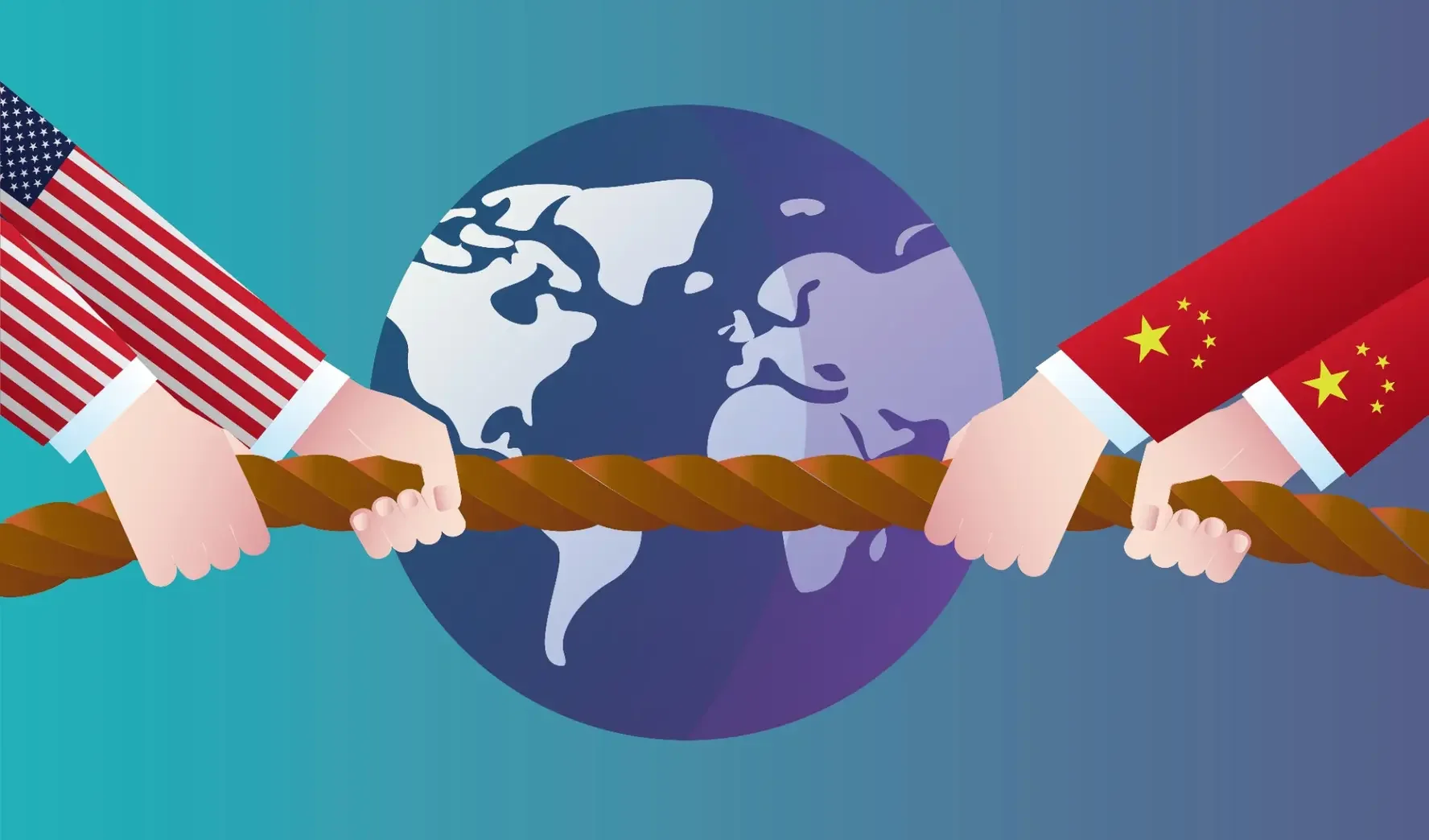
At present, there is deep imbalance in the official narratives on China. In the West, China is depicted as a dystopian hellscape bent on world domination, whereas Chinese state media insists that China is an idyllic, peace-loving and futuristic utopia. Hardly any analysts or commentators try to describe China for what it is, with all its subtleties and complexities. In particular, the “socialist” vs “capitalist” nature of China is widely misunderstood.
This has led to confusion and cynicism among residents and businesses in foreign countries who do not have the chance to visit China for themselves and do not possess the ability to read Chinese sources to obtain a nuanced understanding of conditions on the ground. Foreign leaders are also unsure of how to pursue balanced relations with China, in spite of the clear need to engage with the country. Scholarly research tends to assume that China is in competition with the West, while overlooking areas of cooperation. There is also a lack of objective, neutral, and even-handed comparisons between China and the West that do not ascribe value judgments to either side.
filling the gap
The Center for Balanced China Relations and Trade (CBCRT) was founded to address the information gap in U.S.-China relations, particularly from the legal dimension, in order to inform foreign policymakers and to provide suggestions on how to establish a harmonious and sustainable relationship with the world’s second-largest economy and primary alternative to U.S. hegemony under the “rules-based international order.” Our research and discussions are guided by the three C’s of Comparison, Competition, and Cooperation with China, and we intend to contribute a relatively balanced proportion of research, discussion, and analysis dedicated to each of these narratives.
Anyone who is interested in our research and our mission is free to provide feedback and to participate in our events. CBCRT aims to bring together a group of like-minded individuals to collaborate and share meaningful discussions with the goal of promoting peaceful, productive, and dignified relations with China while maximizing shared interests. We operate on a bilingual basis. Feel free to contact us with any ideas and suggestions.

our founder
Justin Ko is a Chinese-Canadian who has lived and worked in North America for 29 years, which has imbued him with an intimate level of familiarity with the political, legal, and cultural landscape of the West. He has attended North American institutions like the University of British Columbia, the University of California at Berkeley, and Harvard University. Justin was also the Social Chair and board member of the Harvard Asia Law Society, the leading student organization in North America focusing on Asian law. Besides working for a think tank in Hong Kong for two years (please read this memoir for relevant information), he has been educated for at least one year in the Hong Kong University of Science and Technology (MSc in Global China Studies), National Taiwan University (Global MBA), Shanghai Jiao Tong University (Advanced Chinese), and the University of Macau (PhD in Law, Comparative Law). He can speak English, Mandarin Chinese, and Cantonese. He is also a qualified New York state attorney (non-practicing).
During his PhD studies, Justin was interviewed by Macau Business magazine on his views on “One Country, Two Systems”, and his research has been cited in publications like the Beijing Law Review, Sustainability magazine, and the World Journal of Engineering and Technology. He was interviewed for an article by the International Consortium of Investigative Journalists on China’s banking system and has also served as a reviewer for an article in the East Asia Forum. Before entering academia and research, Justin previously ran a successful admissions consulting business that has assisted hundreds of Chinese lawyers who are now practicing throughout the Asia-Pacific. Thus, Justin knows that the multifarious barriers between China and the West can only be broken down by those with bicultural fluency, and he invites all those who share the same goal to contribute to the CBCRT’s mission.
For more information on the CBCRT’s vision and our theory of “Balanced Relations,” please read this manifesto.