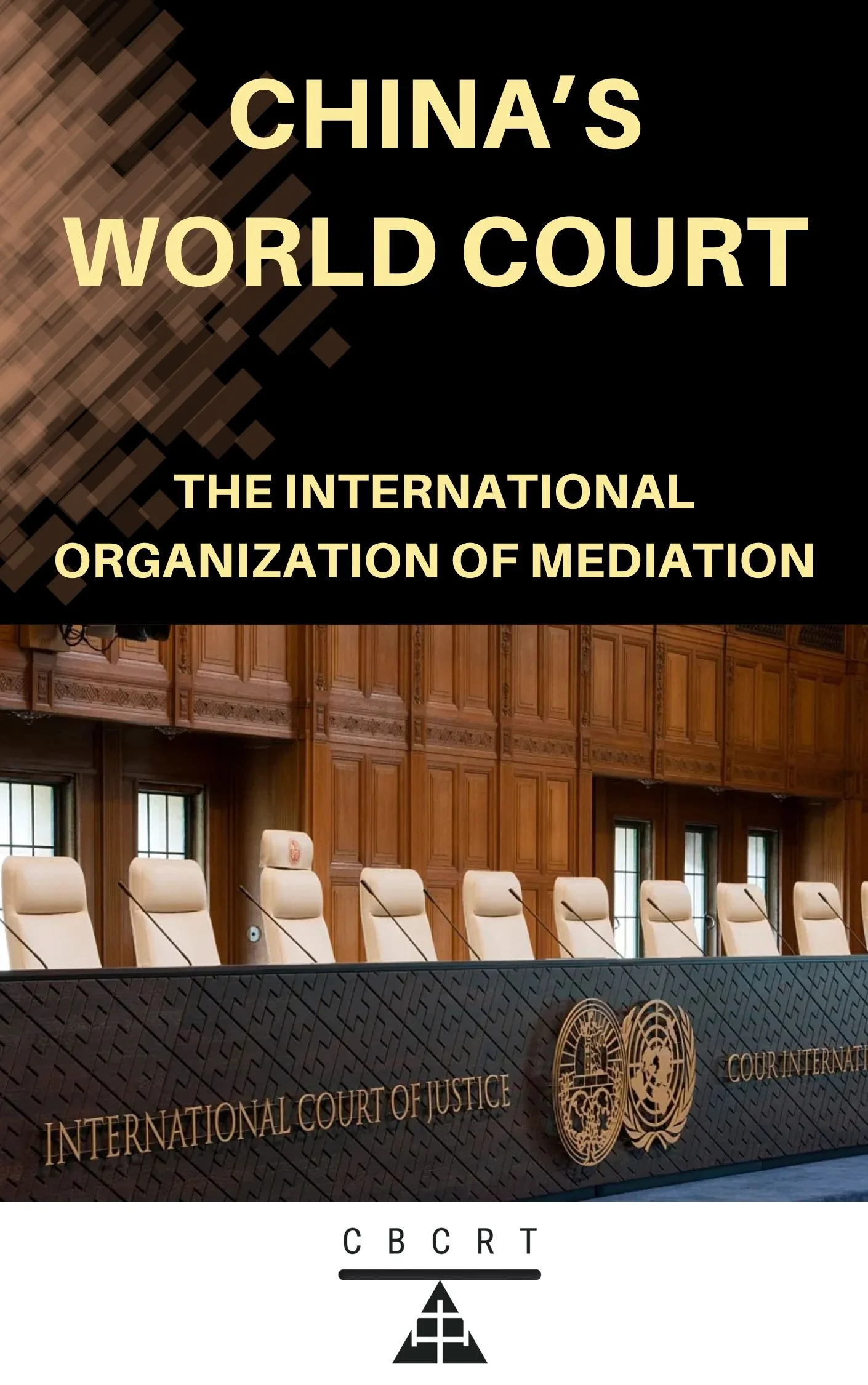
China's World Court: The International Mediation Organization
Prior to 2025, there had never been an intergovernmental organization dedicated to resolving disputes between states, or disputes between a state and an individual from another state, via mediation. The only quasi judicial bodies that purported to have the authority to resolve disputes involving state actors were the International Court of Justice (ICJ), the Permanent Court of Arbitration (PCA), or in the case of commercial disputes the World Trade Organization (WTO) Dispute Settlement Body (DSB). All of this may be about to change, however, with the establishment of the International Organization of Mediation (IOMed) in Hong Kong. This new organization, which has 33 members so far, may well be China's answer to the "World Court." But Hong Kong and the IOMed will have their hands full replacing Singapore as the top commercial dispute resolution center in Asia involving private parties not from Greater China. Instead, it is more likely that the IOMed will focus on Belt and Road Initiative countries, especially those from Africa, rather than on the entire "Global South."
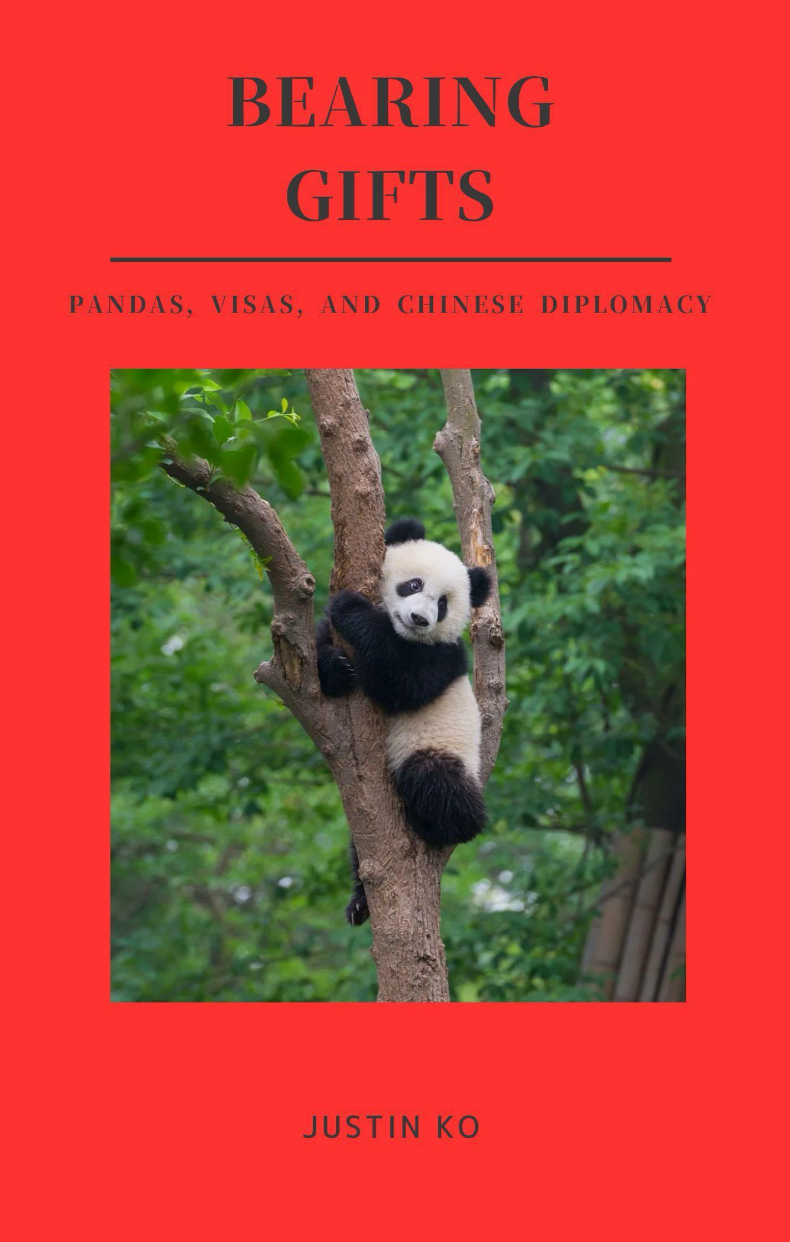
"Bearing" Gifts: Pandas, Visas, and Chinese Diplomacy
China has often been dismissed for lacking the "soft power" of rivals like the U.S., Japan, or even South Korea. In this regard, "panda diplomacy" is perhaps one of the most well-known examples of China attempting to improve its soft power around the world, with varying levels of success. Although opinions of China have worsened in recent years, pandas continue to be loaned to foreign countries, including the U.S., which shows that the Chinese government still believes that panda diplomacy has value for its geopolitical agenda. At the same time, a new form of soft power diplomacy has emerged from China in the form of unilateral visa free travel, with 47 countries to date being offered such treatment without reciprocation for Chinese nationals. This has already led many foreigners to visit China and share their experiences on social media, which is exactly what the Chinese government hopes to achieve. As such, since panda diplomacy and visa diplomacy are both integral parts of China's soft power strategy, this article compares and contrasts both of them in depth.
The Dao of Xi: Daoism and Environmental Policy
China's President Xi Jinping has been known to frequently quote passages from classical Chinese literary and philosophical texts in his speeches. Foreign observers have typically ignored such references or dismissed them as mere attempts to convey cultural confidence or an intellectual aura to the audience. However, in June 2023, Xi gave a speech on traditional culture in which he promoted the "Two Integrations" concept, which officially declared that traditional Chinese culture would be an integral part of China's practice of "socialism with Chinese characteristics" moving forward. This means that it is worthwhile from a policy standpoint to closely analyze Xi's references to classical philosophy to understand how the government aims to achieve its objectives. This paper will specifically analyze Xi's references to Daoist philosophy, especially with regards to Xi's concept of "ecological civilization" and his 2023 speech on "Building a Beautiful China," in order to reveal clues as to how the government may seek to use the cultural resources of ancient China to achieve its objectives with respect to environmental sustainability and protection.
AI Ambiguity: Vagueness in the AI Laws of the EU and China
While vague legal terminology has confounded countless judges and litigants over the centuries, the fact is that no amount of criticism has made legislators less likely to include such language in legislation. To the contrary, it appears that vague vocabulary is more prolific than ever. While this phenomenon could be regarded as lamentable from the perspective of legal clarity and transparency, it has long been difficult to conceive of a better alternative to vague legislation. Nonetheless, legal vagueness and the reliance on courts to provide continuous constitutional interpretations in new scenarios has become increasingly problematic in the era of AI. This is because, even though vague legal language can provide flexibility by allowing laws to adapt to changing circumstances, there invariably is a point where such language becomes increasingly irrelevant and unhelpful in the face of new technologies. This means that judges often lack the kind of legislative guidance that is needed to make difficult decisions on frontier issues. To explore the ramifications of vague language in the AI era, this article assesses some examples of vague language used in the EU AI Act and the Generative AI Interim Measures of China, which are among the two most influential acts of legislation aimed at regulating AI in the world today.